


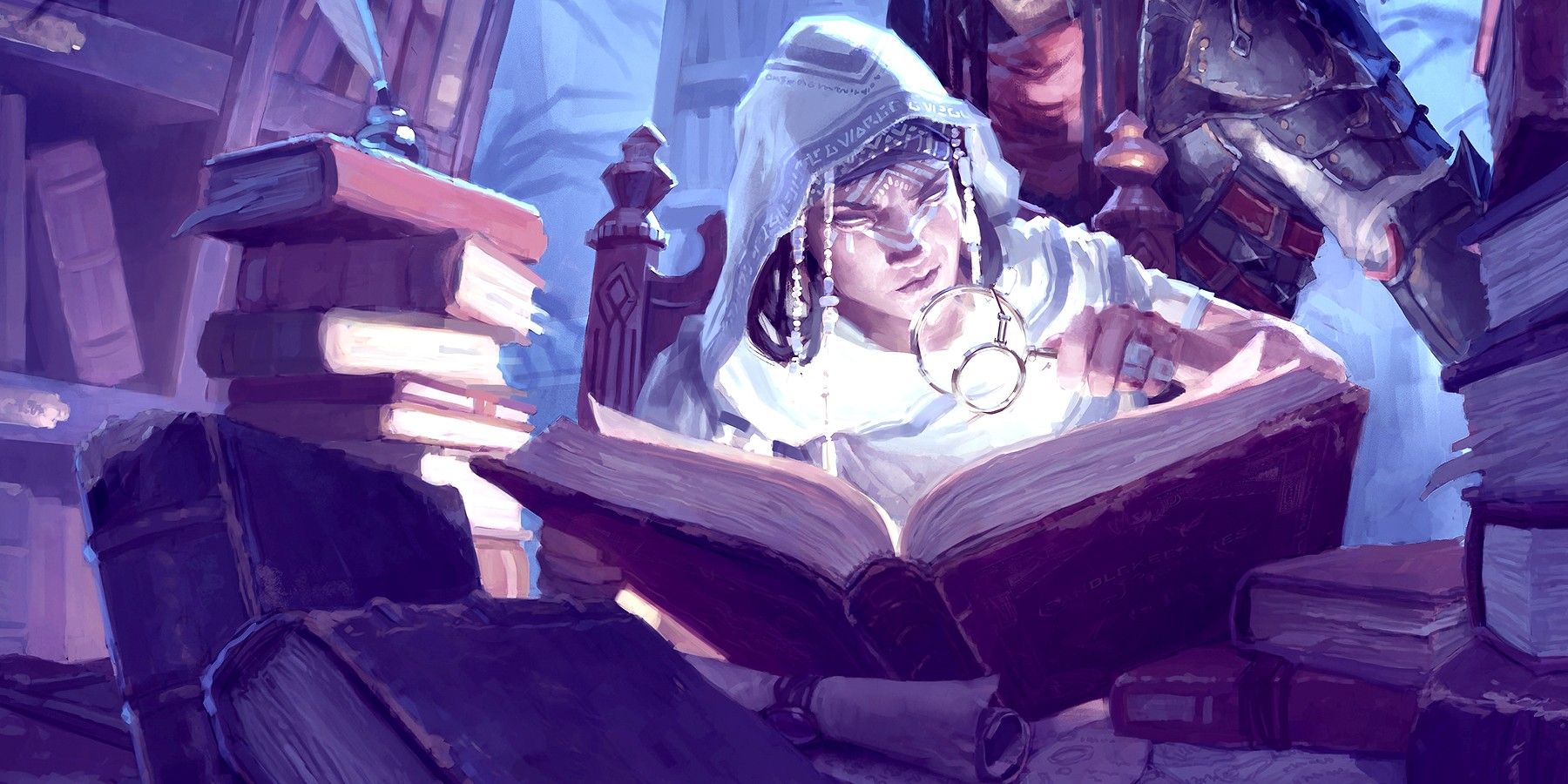
Ability scores play a major role in defining both a character's strengths and their weaknesses in Dungeons & Dragons. While it is generally easy to identify which of a character's ability scores should be the highest, since its based on their class, players have more options when it comes to their lowest. Most players choose to "dump" the stat that will least hinder their character during the campaign, and that stat is often Intelligence.
Not every player can dump Intelligence for their D&D character, since both Wizards and Artificers rely on it for the majority of their spells and abilities. Arcane Trickster Rogues and Eldritch Knight Fighters also utilize Intelligence, so characters with those Dungeons & Dragons subclasses should have at least a decent Intelligence score as well. Besides those characters, many D&D players may feel inclined to ignore their Intelligence score, since it is not as impactful as things like Dexterity or Charisma. It falls to the DM to ensure that Intelligence is an important part of a campaign so that it really does feel like a weakness (or strength) for the characters.
Intelligence governs five skills in Dungeons & Dragons, one of which is Investigation. Sometimes confused with Perception, Investigation is regularly used by characters when examining something specific, whether it be an item, document, or area. Dungeon Masters can award players with high Investigation by allowing them to discern information that helps the party to avoid combat, earn powerful items, or even blackmail NPCs.

As for the other skills impacted by Intelligence, each can play an important part in helping player characters understand information about the world. If a campaign is themed around fighting a god, Religion can play a role in keeping the party safe and identifying the enemy's weakness. If the adventure revolves more around D&D nobility than commoners, with political intrigue at the forefront, History would then become a huge asset to the group. Allowing these skills to matter makes Intelligence more on par with an ability score like Charisma, which has many non-combat uses that make things easy for a party.
Dungeon Masters can also carefully craft their combat encounters to make sure Intelligence is relevant. Dungeons & Dragons enemies such as Mind Flayers, for instance, are difficult to fight without a high Intelligence, since some of their saves require the Ability Score. Putting the party up against these types of monsters is a great way to level the playing field, but can only happen so often. DMs can also allow players to use their Intelligence in order to determine the weakness of various enemies, making for an advantage that is fun to roleplay in character.
Many Dungeons & Dragons players may choose to dump Intelligence for the purpose of roleplaying their character, but others do so purely for game reasons. Every Dungeons & Dragons character needs to have a meaningful weakness, since working together to solve those weaknesses is part of what makes a campaign great, so DMs should ensure there are consequence for low Intelligence scores as well.
from ScreenRant - Feed https://ift.tt/3gLgB9e
via IFTTT
0 comments:
Post a Comment